
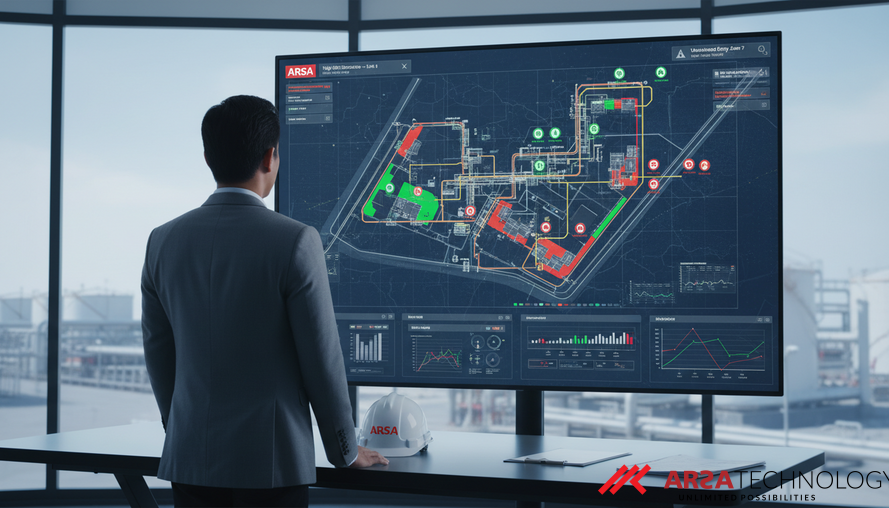
The EHS Director’s Guide to AI Restricted Area Monitoring for Oil and Gas Facilities
For EHS Directors in the demanding oil and gas sector, ensuring the safety of personnel and assets within hazardous zones is paramount. Traditional security measures often fall short, leading to potential incidents, compliance breaches, and escalating operational costs. This comprehensive buyer’s guide explores how advanced AI restricted area monitoring for oil and gas facilities can transform safety protocols, offering unparalleled precision and efficiency. ARSA Technology’s Basic Safety Guard, part of our innovative AI Box Series, provides a robust, edge-based solution designed to meet these critical challenges head-on.
The oil and gas industry operates in environments rife with inherent risks, from volatile materials to heavy machinery. Proactive safety management is not just a regulatory requirement (like ISO 45001 compliance); it’s a strategic imperative that directly impacts profitability, reputation, and workforce well-being. By leveraging AI-powered video analytics, organizations can move beyond reactive incident response to predictive prevention, significantly reducing workplace injury rates and streamlining compliance reporting.
The Imperative for Advanced Restricted Area Monitoring
Oil and gas facilities, including refineries, drilling sites, and storage depots, are characterized by numerous restricted zones. These areas demand stringent access control and continuous surveillance to prevent unauthorized entry, mitigate risks, and ensure adherence to safety protocols. A lapse in monitoring can lead to severe consequences, including accidents, environmental damage, and hefty regulatory fines.
Traditional methods, relying heavily on human patrols or basic CCTV systems, are prone to human error, fatigue, and limited scalability. They often generate vast amounts of unanalyzed footage, making real-time intrusion detection system for hazardous zones a significant challenge. This is where AI-driven solutions, particularly those leveraging edge computing, offer a transformative advantage.
Why Edge AI is Critical for Oil and Gas Facilities
Deploying AI directly at the edge, meaning processing data on-device rather than in the cloud, is a game-changer for critical infrastructure like oil and gas facilities. The ARSA AI Box Series, for instance, processes video streams locally, delivering instant insights without cloud dependency or infrastructure replacement. This approach offers several key benefits:
- Low Latency: Real-time alerts are crucial in hazardous environments. Edge processing eliminates network delays, ensuring immediate notification of potential intrusions or safety violations.
- Data Sovereignty and Privacy: All video streams and inference results remain within your network, addressing stringent data privacy concerns and compliance requirements (e.g., GDPR, Indonesia PDPA). This is particularly vital for sensitive operational data.
- Operational Reliability: Edge systems can operate fully offline, ensuring continuous safety zone monitoring without internet, a critical feature for remote or air-gapped sites common in oil and gas.
- Reduced Bandwidth Costs: By processing data locally, only relevant metadata or alerts need to be transmitted, significantly cutting down on bandwidth usage and associated cloud costs.
For a deeper dive into the benefits of edge AI in this context, read our article on Why Edge AI is Essential for AI Restricted Area Monitoring for Oil and Gas Facilities.
Key Features to Look for in an AI Restricted Area Monitoring Solution
When evaluating an AI solution for your oil and gas facility, consider these essential capabilities:
1. Robust Intrusion Detection and Alerts
An effective intrusion detection system for hazardous zones must accurately identify unauthorized personnel or vehicles entering designated restricted areas. The ARSA Basic Safety Guard provides precise restricted area monitoring, triggering automated restricted zone alerts edge computing instantly. This capability is vital for preventing accidents and maintaining site security.
2. Comprehensive PPE Compliance Monitoring
Safety in oil and gas is synonymous with PPE. The system should offer reliable PPE detection, including hard hat detection and safety vest detection. This ensures all personnel adhere to mandatory safety gear requirements, minimizing risks in high-hazard areas. Automated safety compliance reporting generated from these detections can significantly reduce manual inspection burdens and support audits.
3. Seamless Integration with Existing Infrastructure
A plug-and-play solution that integrates with your existing CCTV infrastructure is ideal. The ARSA AI Box Series works with standard ONVIF and RTSP cameras, allowing you to upgrade your current surveillance system into an intelligent safety platform without costly replacements. This ease of deployment, often achievable in just 5 minutes, ensures rapid rollout across multiple sites. For more on this, explore How to Turn Existing CCTV into Smart Safety Monitoring with AI Edge Computing.
4. Scalable Hardware Options
Whether you need to monitor a few critical points or an entire sprawling facility, the hardware should scale. ARSA offers flexible configurations: a Mini PC model capable of processing up to 3 cameras, perfect for distributed deployments, and a Server model that can handle up to 30 cameras for centralized monitoring of heavier workloads.
5. Actionable Insights and Reporting
Beyond real-time alerts, the system should provide valuable data. Dashboards displaying event logs, compliance rates, and trend analysis are crucial for EHS Directors to make informed decisions, identify recurring issues, and demonstrate ROI.
Business Outcomes: The ROI of ARSA Basic Safety Guard
Investing in an advanced AI restricted area monitoring solution like ARSA Basic Safety Guard translates into tangible business benefits:
- Reduced Workplace Injury Rates: Proactive detection of safety violations and unauthorized access prevents incidents before they occur, protecting your workforce and minimizing downtime.
- Automated Compliance Reporting: Simplify the complex task of adhering to international safety standards such as OSHA, EU-OSHA, and ISO 45001. The system automates data collection and reporting, ensuring audit readiness and reducing administrative overhead.
- Lower Workers’ Compensation Insurance Premiums: A demonstrably safer work environment, backed by data, can lead to reduced insurance costs.
- Eliminate Manual Safety Inspections: Free up valuable EHS personnel from repetitive manual checks, allowing them to focus on higher-value strategic safety initiatives.
- Enhanced Operational Efficiency: By preventing disruptions and ensuring compliance, operations run smoother and more predictably.
For a detailed look at the financial impact, consider reading How ARSA AI Box Delivers Measurable ROI for AI Restricted Area Monitoring in Oil and Gas Facilities.
Choosing the Right Partner
Selecting the right technology partner is as crucial as the technology itself. ARSA Technology brings over seven years of expertise in deploying practical AI solutions for governments and enterprises. Our focus is on delivering production-ready systems that offer accuracy, scalability, privacy, and operational reliability. We understand the unique constraints of industrial environments and engineer solutions that work in the real world.
Our ARSA Basic Safety Guard (AI Box) is specifically engineered to provide superior AI perimeter protection for mining sites and oil and gas facilities, ensuring critical safety zones are continuously monitored. For organizations with unique requirements, ARSA also offers Custom AI Solutions tailored to specific operational needs.
Conclusion
The landscape of safety and security in oil and gas facilities is evolving, and AI-powered solutions are no longer a luxury but a necessity. By adopting advanced AI restricted area monitoring for oil and gas facilities, EHS Directors can significantly enhance safety, ensure regulatory compliance, and drive substantial operational efficiencies. The ARSA Basic Safety Guard (AI Box) offers a proven, edge-based solution that delivers real-time intelligence, robust protection, and measurable ROI.
Ready to transform your safety protocols and secure your hazardous zones with intelligent AI? Contact ARSA Technology’s solutions team today to discuss your specific needs or explore all ARSA products designed for mission-critical environments.
FAQ
What is AI restricted area monitoring for oil and gas facilities?
AI restricted area monitoring for oil and gas facilities involves using artificial intelligence and video analytics to automatically detect and alert personnel to unauthorized entry or unsafe conditions within designated hazardous zones. This enhances security and ensures compliance with safety regulations.
How does edge computing benefit safety zone monitoring without internet?
Edge computing processes video data directly on the device (like the ARSA AI Box), eliminating the need for constant internet connectivity to the cloud. This ensures continuous safety zone monitoring without internet, crucial for remote oil and gas sites, and provides real-time alerts with minimal latency.
Can ARSA’s AI Box help with PPE compliance in hazardous zones?
Yes, ARSA’s Basic Safety Guard (AI Box) includes advanced PPE detection capabilities, such as hard hat detection and safety vest detection. It automatically monitors compliance in hazardous zones, generating real-time alerts for violations and providing data for safety compliance reporting.
What are the typical business outcomes of deploying an AI intrusion detection system for hazardous zones?
Deploying an AI intrusion detection system for hazardous zones leads to reduced workplace injury rates, automated compliance reporting (e.g., for ISO 45001), lower workers’ compensation insurance premiums, and the elimination of many manual safety inspections, ultimately enhancing operational efficiency and safety.
Stop Guessing, Start Optimizing.
Discover how ARSA Technology drives profit through intelligent systems.