
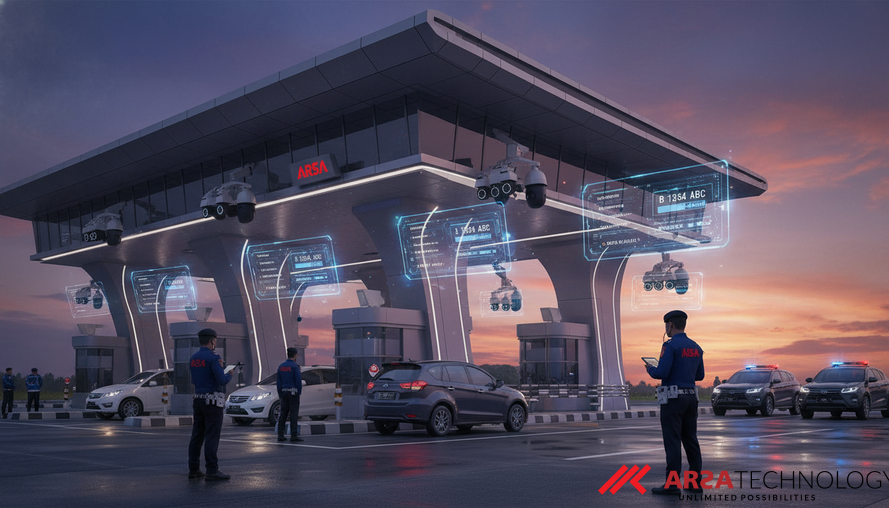
In an increasingly interconnected world, the need for robust security infrastructure at borders and within law enforcement operations has never been more critical. A key component of this infrastructure is the License Plate Recognition system for law enforcement and border security. These advanced systems, often referred to as Automatic Number Plate Recognition (ANPR), are no longer just about identifying vehicles; they are about real-time intelligence, threat detection, and streamlining complex logistical flows. But what does it truly cost to implement such a sophisticated solution in 2026, especially when off-the-shelf options fall short of specific operational demands?
Deploying a custom AI solution like a high-performance LPR system involves more than just software licenses. It requires a strategic investment in tailored technology that delivers measurable outcomes, from enhanced security to significant operational efficiencies. ARSA Technology specializes in providing ARSA Custom AI Solutions, engineered to meet the unique and demanding requirements of government and enterprise clients.
Understanding the Investment in Custom ANPR System Development
The cost of a License Plate Recognition system for law enforcement and border security is multifaceted, encompassing development, deployment, and ongoing maintenance. For mission-critical applications, a generic solution rarely suffices. This is where custom ANPR system development becomes indispensable. The investment typically covers several key areas:
- Discovery & Needs Assessment: Before any code is written, a thorough understanding of the operational environment, existing infrastructure, specific threats, and desired outcomes is paramount. This phase involves expert consultation to define the scope, technical specifications, and integration points.
- Proof of Concept (PoC) Development: For complex requirements, a PoC is crucial. This allows stakeholders to visualize and test core functionalities, ensuring the proposed solution aligns with expectations and can handle real-world data. It minimizes risk and provides a clear roadmap for full-scale development.
- Production Development & Integration: This is the core engineering phase where the custom computer vision models are trained, the software is built, and it’s integrated with existing systems (e.g., databases, alert systems, access control). This includes developing specialized modules like VIN tamper detection system capabilities or advanced analytics for vehicle behavior.
- Deployment & Scaling: Rolling out the solution across multiple sites or integrating it into a vast network requires careful planning and execution. This phase also includes optimizing the system for performance and ensuring it can scale to handle increasing data volumes and camera feeds.
ARSA Technology’s approach to custom AI solutions follows these four phases: discovery, PoC, production, and scale, ensuring a robust, future-proof deployment. Our 7+ years of experience in production AI delivery across government, defense, and industrial clients in the Asia Pacific region underscore our capability to handle projects of this magnitude.
Key Factors Influencing LPR System Costs
Several factors significantly impact the overall cost of a custom LPR system:
1. Complexity of Recognition Requirements:
A basic LPR system might only need to read standard plates. However, a high speed license plate recognition deployment for border security often requires recognizing plates from multiple countries, varying fonts, damaged plates, or under diverse weather conditions. ARSA’s LPR/ANPR systems are engineered to process over 200 vehicles per minute with 98.5% accuracy, even with challenging inputs. This level of precision and speed demands sophisticated AI models and robust edge computing capabilities.
2. Integration with Existing Infrastructure:
Seamless integration with existing CCTV systems, databases, and command centers is vital. A custom solution must be able to ingest feeds from 64 concurrent camera streams per node and provide data via REST API for a unified operational picture. This often involves developing custom API connectors and ensuring data privacy and security compliance (e.g., GDPR, CCPA).
3. Advanced Analytics and Features:
Beyond basic plate reading, modern LPR systems can incorporate:
- VIN tamper detection system: Identifying discrepancies between a vehicle’s license plate and its Vehicle Identification Number (VIN) or detecting physical tampering.
- ANPR for vehicle inspection: Automating parts of vehicle inspection processes by cross-referencing plate data with maintenance records or security watchlists.
- Threat and action recognition: Identifying suspicious vehicle movements or activities in real-time.
- Restricted area protection: Automatically alerting authorities when unauthorized vehicles attempt to enter sensitive zones.
- Private LLM deployment: For advanced natural language processing of associated vehicle data or incident reports.
- Document intelligence: Extracting and verifying information from vehicle-related documents.
- Behavioral anomaly detection: Flagging unusual vehicle patterns that might indicate illicit activities.
These advanced features, while adding to the initial development cost, deliver immense value in terms of proactive security and operational intelligence. For instance, in logistics, an ANPR system can automate gate access and track fleet movements, significantly improving efficiency and security within large facilities. You can explore all ARSA products to see how these modules are integrated.
4. Deployment Model and Data Sovereignty:
Whether the solution is deployed on-premise, at the edge, or in a private cloud environment impacts infrastructure costs and data control. Government and defense entities often require air-gapped systems or strict data sovereignty, which necessitates on-premise or edge deployments. ARSA Technology provides flexible deployment models, ensuring full data ownership and compliance with stringent security protocols. Our proprietary ARSA AI API Suite and SDKs are designed for both cloud and on-premise use, offering unparalleled control.
5. Ongoing Support and Maintenance:
Like any critical infrastructure, an LPR system requires ongoing support, updates, and potential retraining of AI models to adapt to new threats or data patterns. This long-term partnership ensures the system remains effective and secure.
The ROI of a Custom License Plate Recognition System
While the initial investment in a custom License Plate Recognition system for law enforcement and border security might seem substantial, the return on investment (ROI) is often compelling. Organizations deploying ARSA’s custom AI solutions have reported:
- Over 90% reduction in unauthorized access incidents at critical checkpoints.
- A 75-90% reduction in manual data entry time for vehicle processing, freeing up personnel for higher-value tasks.
- A massive reduction in monitoring workload, as AI handles routine surveillance and flags only critical events.
- Payback periods typically ranging from 12 to 24 months, driven by increased efficiency, reduced fraud, and enhanced security.
For a deeper dive into the financial benefits, consider reading our article on Optimizing Operations: The ROI of a License Plate Recognition System for Law Enforcement and Border Security. This demonstrates how a tailored ANPR solution can transform operational challenges into strategic advantages.
Compliance and Trust
In the realm of law enforcement and border security, compliance with international standards is non-negotiable. ARSA’s solutions are designed with privacy and security at their core, adhering to frameworks like GDPR, CCPA, and ISO 30107-3 for anti-spoofing in biometric systems (relevant for our ARSA Face Recognition & Liveness API, which often complements LPR systems for multi-modal identity verification). Our commitment to data sovereignty and secure deployments, as highlighted in Enhancing Border Security: The ROI of a License Plate Recognition System for Law Enforcement, builds trust for critical infrastructure operators.
Conclusion
The investment in a custom License Plate Recognition system for law enforcement and border security is a strategic decision that pays dividends in enhanced security, operational efficiency, and compliance. While costs vary based on complexity and features, the long-term benefits of a tailored, high-performance solution far outweigh the initial outlay. By partnering with an experienced provider like ARSA Technology, you gain access to cutting-edge AI, proven deployment methodologies, and a commitment to delivering measurable impact. For organizations looking to build a custom computer vision system for industrial or government operations, our guide on How to Build a Custom Computer Vision System for Industrial Operations offers valuable insights.
To understand how a custom LPR solution can transform your operations and to get a detailed quotation tailored to your specific needs, we invite you to contact ARSA’s solutions team today. Explore our Custom AI & Engineering Services overview to learn more about our capabilities.
FAQ
What is the typical development timeline for a custom ANPR system development?
The timeline for custom ANPR system development varies significantly based on complexity. A comprehensive project, including discovery, PoC, production, and scaling for a high speed license plate recognition deployment, can range from 6 to 18 months. Simpler integrations might be faster, while highly specialized systems with advanced features like VIN tamper detection system capabilities could take longer.
How does ARSA Technology ensure the accuracy of its high speed license plate recognition deployment?
ARSA Technology leverages advanced deep learning models and extensive real-world data training to achieve high accuracy in its high speed license plate recognition deployment. Our systems boast 98.5% accuracy even when processing over 200 vehicles per minute, and we continuously refine models based on deployment feedback and new data.
Can a custom LPR system integrate with existing vehicle inspection processes for ANPR for vehicle inspection?
Absolutely. A custom LPR system is designed for flexible integration. For ANPR for vehicle inspection, it can connect with existing databases, vehicle management systems, and even IoT sensors to automate data cross-referencing, flag anomalies, and streamline the inspection workflow. This significantly reduces manual effort and improves consistency.
What are the data privacy considerations for a License Plate Recognition system for law enforcement and border security?
Data privacy is paramount for any License Plate Recognition system for law enforcement and border security. ARSA ensures compliance by offering on-premise or private cloud deployment options, ensuring full data ownership. We implement AES-256 encryption, role-based access control, and audit logs, aligning with international standards like GDPR and local data protection regulations.
Stop Guessing, Start Optimizing.
Discover how ARSA Technology drives profit through intelligent systems.