
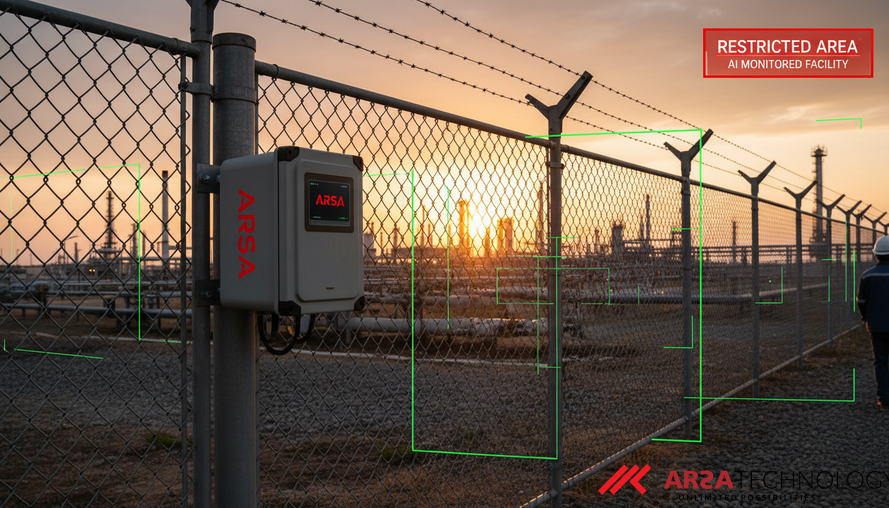
ARSA Basic Safety Guard (AI Box) Pricing: A Cost-Benefit Analysis for AI Restricted Area Monitoring in Oil and Gas Facilities
For EHS Directors in the demanding oil and gas sector, ensuring safety and compliance within hazardous operational zones is paramount. Traditional security measures often fall short, leading to potential incidents, costly downtime, and regulatory penalties. This is where advanced solutions like the ARSA Basic Safety Guard (AI Box) come into play, offering robust AI restricted area monitoring for oil and gas facilities. Understanding the investment in such a critical system requires a comprehensive look beyond the initial price tag, focusing on the long-term value, operational efficiency, and enhanced safety outcomes it delivers.
The ARSA Basic Safety Guard (AI Box) is not merely a product; it’s a strategic investment in preventing accidents, ensuring compliance, and ultimately safeguarding personnel and assets. This article will break down the value proposition, helping EHS Directors and procurement teams assess the true cost-benefit of deploying this cutting-edge edge AI solution.
The Imperative for Advanced Safety in Oil and Gas
Oil and gas operations inherently involve high-risk environments. From drilling platforms to refineries and pipelines, the presence of flammable materials, heavy machinery, and complex processes necessitates stringent safety protocols. An effective intrusion detection system for hazardous zones is crucial, not just for security, but for preventing unauthorized access that could lead to catastrophic events. Manual monitoring is prone to human error, especially across vast or remote sites. This is why automated, intelligent systems are no longer a luxury but a necessity.
ARSA Technology has been at the forefront of delivering practical AI solutions for over seven years, trusted by government and enterprise clients to enhance security and optimize operations. Our commitment to accuracy, scalability, privacy, and operational reliability is embedded in every system we deliver.
ARSA Basic Safety Guard (AI Box): Edge AI for Uncompromised Safety
The ARSA Basic Safety Guard is a core module within our innovative AI Box Series overview. It’s designed specifically for environments where cloud dependency is not feasible or desirable, making it ideal for the often-remote and sensitive nature of oil and gas facilities. This plug-and-play edge hardware processes video streams locally, delivering instant insights without relying on external cloud infrastructure. This “no cloud dependency” approach is critical for maintaining data sovereignty and ensuring rapid response times, even in areas with limited or no internet connectivity. For a deeper dive into why edge AI is essential for this sector, read our article on AI Restricted Area Monitoring for Oil and Gas Facilities: Why Edge AI is Essential.
Key features of the ARSA Basic Safety Guard (AI Box) include:
- PPE Detection: Real-time monitoring for essential Personal Protective Equipment like hard hats, safety vests, and masks.
- Restricted Area Monitoring: Defines and monitors specific zones for unauthorized entry or activity.
- Intrusion Alerts: Instant notifications upon detection of anomalies or breaches.
- Safety Compliance Reporting: Automated logs and reports to streamline regulatory audits.
The system works seamlessly with existing CCTV infrastructure, compatible with ONVIF and RTSP cameras, allowing for a 5-minute setup without replacing current equipment. This significantly reduces deployment costs and minimizes operational disruption.
Understanding the Investment: Beyond the Price Tag
While specific pricing for the ARSA Basic Safety Guard (AI Box) is tailored to project scope, the investment is justified by substantial returns in safety, efficiency, and compliance. Rather than a simple cost, it represents a strategic expenditure that mitigates risks and generates measurable ROI. We encourage interested parties to contact ARSA solutions team for a detailed quotation based on their specific needs.
Consider the following factors that influence the overall value and cost-effectiveness:
1. Reduced Workplace Injury Rates
The primary benefit is the dramatic reduction in workplace injury rates. By providing real-time automated restricted zone alerts edge computing, the system ensures immediate response to safety breaches. This proactive approach minimizes incidents, protecting personnel from harm and reducing the human and financial costs associated with accidents. This directly contributes to achieving ISO 45001 compliance, a critical standard for occupational health and safety management. Our article, How ARSA AI Box Delivers Measurable ROI for AI Restricted Area Monitoring in Oil and Gas Facilities, provides further insights into these benefits.
2. Automation of Compliance Reporting
Manual safety inspections and reporting are time-consuming and prone to inconsistencies. The ARSA Basic Safety Guard automates the collection of compliance data, making it easier to meet stringent regulations such as OSHA, EU-OSHA, and ISO 45001. This automation frees up EHS staff to focus on higher-value tasks, improving overall operational efficiency.
3. Lower Workers’ Compensation Insurance Premiums
A demonstrable reduction in workplace incidents and a strong safety record can lead to lower workers’ compensation insurance premiums. The data-backed evidence provided by the AI Box system offers tangible proof of an organization’s commitment to safety, directly impacting insurance costs over time.
4. Elimination of Manual Safety Inspections in Hazardous Areas
Deploying an AI perimeter protection for mining sites and oil and gas facilities means fewer personnel are exposed to hazardous zones for routine inspections. The AI Box takes over the continuous monitoring, detecting PPE non-compliance or unauthorized access with superior accuracy and consistency, even in challenging conditions. This is particularly valuable for safety zone monitoring without internet connectivity, ensuring continuous protection. For organizations looking to implement on-premise solutions without cloud dependency, our guide on Implementing On-Premise AI Safety Analytics Without Cloud Dependency for Oil & Gas offers valuable insights.
Scalability and Deployment Flexibility
The ARSA AI Box Series offers flexible hardware configurations to suit diverse operational scales. The Mini PC Model can process up to 3 camera streams, ideal for distributed deployments in space-constrained environments. For larger, centralized monitoring needs, the Server Model (High-Density) can handle up to 30 camera streams simultaneously, powered by Intel® Processors paired with dedicated NVIDIA® GPUs. This scalability ensures that the investment grows with your needs, providing a future-proof solution.
While the ARSA Basic Safety Guard focuses on industrial safety, ARSA Technology offers a comprehensive suite of all ARSA products, including AI video analytics software and face recognition solutions, catering to various enterprise needs. For instance, our ARSA Smart Retail Counter (Software) demonstrates the versatility of our AI capabilities across different sectors.
Conclusion: A Smart Investment in Safety and Operational Excellence
The ARSA Basic Safety Guard (AI Box) represents a critical investment for EHS Directors in the oil and gas industry. Its capabilities in AI restricted area monitoring for oil and gas facilities translate directly into tangible benefits: enhanced safety, reduced operational risks, streamlined compliance, and significant cost savings. By choosing an edge computing solution with no cloud dependency, organizations gain full control over their data, ensuring privacy and operational reliability in even the most challenging environments.
To explore how the ARSA Basic Safety Guard (AI Box) can transform safety protocols and deliver measurable ROI for your operations, we invite you to connect with our expert team for a personalized consultation and quotation.
—
FAQ Section
What is the typical ROI for deploying AI restricted area monitoring for oil and gas facilities?
Organizations typically see ROI within 14-18 months through reduced workplace injury rates, lower workers’ compensation insurance premiums, and increased operational efficiency from automated compliance reporting. The prevention of major incidents also averts potentially catastrophic financial and reputational damage.
How does the ARSA Basic Safety Guard (AI Box) ensure safety zone monitoring without internet?
The ARSA Basic Safety Guard (AI Box) operates on an edge computing model, meaning all AI processing and data analysis occur locally on the device. This eliminates the need for continuous internet connectivity, making it ideal for remote oil and gas facilities and ensuring real-time alerts and data sovereignty.
Can the ARSA Basic Safety Guard detect specific PPE like hard hats and safety vests?
Yes, the ARSA Basic Safety Guard is specifically designed with advanced PPE detection capabilities, including the ability to identify if personnel are wearing hard hats, safety vests, and other critical personal protective equipment, ensuring compliance in hazardous zones.
Stop Guessing, Start Optimizing.
Discover how ARSA Technology drives profit through intelligent systems.