
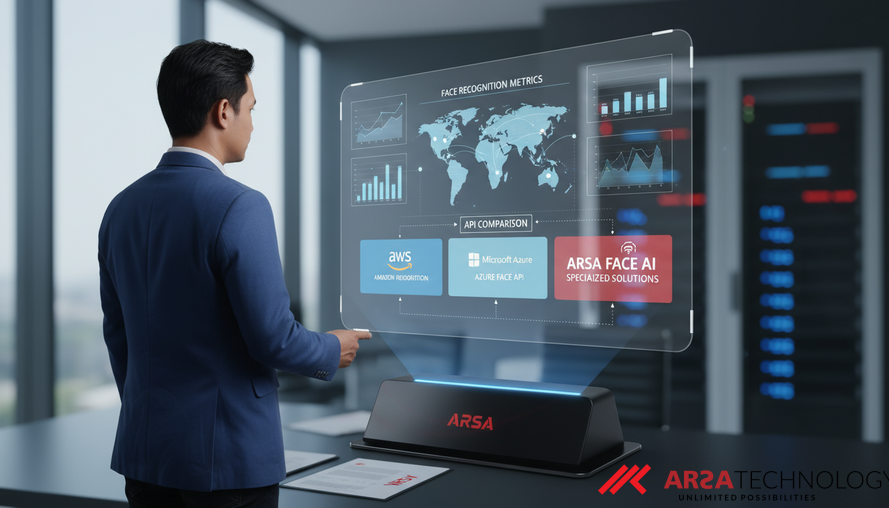
Seeking a Robust Face Recognition API Alternative to AWS Rekognition and Azure Face?
In the rapidly evolving landscape of digital identity and security, enterprises, particularly within the telecommunications sector, are constantly searching for advanced yet practical solutions. When it comes to biometric authentication and identity verification, many organizations initially turn to hyperscale cloud providers like AWS, Azure, and Google. However, a growing number of architects and IT leaders are now actively seeking a powerful face recognition API alternative to AWS Rekognition and Azure Face that offers greater flexibility, transparent pricing, and specialized features. This guide explores the strategic considerations for choosing the right face recognition solution, contrasting cloud APIs with on-premise SDKs, and presenting compelling alternatives designed for real-world enterprise needs.
The demand for reliable face recognition technology spans various applications, from secure customer onboarding (e-KYC) and multi-factor authentication to access control and fraud prevention. While hyperscalers offer broad AI services, their face recognition offerings often come with complexities in pricing, data sovereignty, and customization that may not align with specific business requirements or regulatory obligations like PSD2, eIDAS, and FinCEN. This article aims to provide a clear pathway for architects evaluating options beyond the usual suspects.
The Shifting Landscape of Face Recognition Solutions
For years, major cloud providers have dominated the AI services market, including face recognition. Their extensive infrastructure and broad service portfolios make them a convenient starting point for many. However, as AI adoption matures, enterprises are encountering limitations that necessitate exploring specialized vendors. These limitations often include:
- Cost Predictability: Hyperscaler pricing models can become complex and unpredictable at scale, making budget forecasting challenging for long-term deployments.
- Vendor Lock-in: Deep integration with a single cloud provider can create dependencies that hinder future flexibility and innovation.
- Data Sovereignty and Privacy: For highly regulated industries like telecommunications, ensuring full control over biometric data and compliance with global privacy regulations (e.g., GDPR, CCPA) is paramount.
- Specialized Features: While general-purpose, hyperscaler APIs might lack the depth of features or the specific anti-spoofing capabilities required for mission-critical identity verification.
These factors drive the search for a dedicated face recognition API alternative to AWS Rekognition and Azure Face, one that can deliver enterprise-grade performance without the associated complexities.
Cloud API vs. On-Premise SDK: A Strategic Comparison
Choosing between a cloud-based API and an on-premise SDK is a fundamental decision that impacts deployment, data control, and operational overhead. Both models offer distinct advantages, depending on an organization’s strategic priorities.
Cloud API for Agility and Scalability
A cloud-based Face Recognition API, like the ARSA Face Recognition & Liveness API, offers unparalleled agility. It allows developers to integrate advanced biometric capabilities into their applications with minimal infrastructure management. For architects prioritizing rapid deployment and scalable solutions without heavy upfront investment, a cloud API is often the ideal choice.
ARSA’s API provides a complete identity layer, not just a simple comparison endpoint. It includes robust 1:N face recognition against a database, 1:1 face verification, face detection with bounding boxes, and critical liveness detection capabilities. This means you can launch face login in days, not months, and meet stringent KYC and AML obligations. With a simple x-key-secret API key authentication, you can make your first API call in under 5 minutes. This model is particularly attractive for organizations seeking a cheaper face recognition API than hyperscalers while still maintaining high accuracy and reliability.
Key advantages of a cloud API:
- Reduced Operational Burden: No servers to manage, no software to update. The vendor handles infrastructure.
- Instant Scalability: Easily scale up or down based on demand, paying only for what you use.
- Rapid Development: Quick integration via REST API, accelerating time-to-market for new features.
- Cost-Effectiveness: Often provides a more predictable and potentially AWS Rekognition alternative pricing structure, especially for specific use cases.
On-Premise SDK for Data Sovereignty and Control
For environments with stringent data sovereignty requirements, such as government agencies or critical infrastructure operators, an on-premise SDK is indispensable. ARSA also offers a Face Recognition & Liveness SDK that allows organizations to deploy the entire system within their own infrastructure. This ensures zero external data transfer and full control over biometric data, aligning with the highest levels of data privacy and compliance. While requiring more infrastructure management, it provides an air-gapped solution for sensitive environments.
Why Seek a Face Recognition API Alternative to AWS Rekognition and Azure Face?
The decision to look beyond hyperscalers often boils down to a combination of cost, control, and specialized needs. Many enterprises find that while AWS Rekognition and Azure Face offer foundational services, they may not be the most optimized or cost-effective for specific, high-volume, or compliance-driven face recognition applications.
- Cost Optimization: Hyperscalers often have complex tiered pricing that can quickly accumulate, especially with data ingress/egress fees and additional service charges. A specialized provider like ARSA offers transparent, usage-based pricing models, making it a viable AWS Rekognition alternative pricing option. For instance, ARSA’s pricing plans range from a free tier (100 calls/month, 100 face IDs) to a Mega Enterprise Tier ($1,290/mo for 500,000 calls and 500,000 face IDs), with all features included across every plan. This predictable model allows telecommunications companies to manage costs effectively for services like e-KYC or subscriber authentication.
- Enhanced Data Privacy and Compliance: For telecommunications, handling sensitive customer identity data is a core responsibility. An Azure Face API alternative that offers isolated, per-account face databases ensures robust data privacy and tenant separation. ARSA’s architecture is designed with this in mind, helping organizations meet global standards like GDPR and CCPA, which are crucial for international operations.
- Specialized Liveness Detection: Preventing presentation attacks and synthetic identity fraud is critical for secure onboarding. While hyperscalers offer liveness detection, specialized providers often focus on advanced active and passive liveness detection techniques, including head movement challenges for active liveness, to provide superior anti-spoofing capabilities. This is vital for industries where fraud prevention directly impacts revenue and trust.
- Dedicated Support and Expertise: Working with a specialized vendor often means access to a team with deep expertise in face recognition technology, offering more tailored support and faster resolution of specific challenges compared to general-purpose cloud support.
Even for those considering a Google Vision face API alternative, the same principles apply. While Google Vision is powerful for general image analysis, its face recognition component may not offer the same level of specialized features or pricing advantages as a dedicated biometric solution.
ARSA Face Recognition & Liveness API: A Powerful Hyperscaler Alternative
ARSA Technology, with over 7 years of experience in AI and IoT solutions, has engineered its ARSA Face Recognition & Liveness API to address the specific needs of enterprises seeking a high-performance, privacy-conscious, and cost-effective face recognition API alternative to AWS Rekognition and Azure Face. Our solution is built for production-ready systems, ensuring accuracy, scalability, privacy, and operational reliability.
Here’s what sets ARSA apart:
- Comprehensive Core Functions: Beyond basic detection, our API offers:
- 1:N Face Recognition Against Database: Identify individuals from a large database, crucial for access control or identifying known fraudsters.
- 1:1 Face Verification: Confirm identity during login or transactions, ensuring the person is who they claim to be.
- Advanced Liveness Detection: Both passive and active liveness detection with head movement challenges to prevent sophisticated spoofing attacks (ISO 30107-3 compliant).
- Rich Metadata: Face detection with bounding boxes, age estimation, gender classification, and expression detection (neutral, happy, sad, surprise, anger) provide deeper insights.
- Robust Face Database Management: Easily enroll, update, and remove identities, with per-account isolated databases for data privacy and tenant separation. Multiple images per face ID can be used for higher accuracy.
- Developer-Friendly and Cost-Effective:
- Quick Setup: Get started with your first API call in under 5 minutes.
- Transparent Pricing: Our tiered pricing model (Basic Free, Pro, Ultra, Mega) ensures you pay only for what you use, making us a genuinely cheaper face recognition API than hyperscalers. All features are included on every plan, with PayPal monthly subscription billing.
- Developer Dashboard: Monitor usage analytics and manage your account efficiently.
- Flexible Input: Supports JPEG/PNG images and MP4/WebM video for active liveness. Detailed cURL/Python/JavaScript code examples are available in our Face Recognition API documentation.
- Business Outcomes and Compliance: ARSA’s API is engineered to help telecommunications companies:
- Accelerate Onboarding: Streamline e-KYC processes, reducing friction and increasing conversion rates.
- Enhance Security: Prevent presentation attacks and synthetic identity fraud, safeguarding customer accounts and financial transactions.
- Ensure Compliance: Our solutions are built with global compliance frameworks in mind, including GDPR, PSD2, eIDAS, and FinCEN, providing the trust signals necessary for regulated industries.
- Minimize Infrastructure Overhead: With no infrastructure to manage, your team can focus on core business innovation.
For organizations that need to maintain strict control over their data, ARSA also offers the Face Recognition & Liveness SDK, providing the same powerful AI capabilities for air-gapped or private cloud deployments. This dual offering ensures that ARSA Technology can meet a wide spectrum of enterprise needs.
Conclusion
The search for a reliable face recognition API alternative to AWS Rekognition and Azure Face is a strategic move for enterprises prioritizing cost efficiency, data sovereignty, and specialized biometric capabilities. While hyperscalers offer broad services, dedicated providers like ARSA Technology deliver focused, high-performance solutions engineered for mission-critical applications. Our ARSA Face Recognition & Liveness API provides a robust, developer-friendly, and cost-effective platform that empowers organizations, especially in telecommunications, to enhance security, streamline operations, and meet stringent compliance requirements without the complexities often associated with larger cloud providers.
Ready to explore a superior face recognition solution? Create a free Face API account today and experience the ARSA difference, or contact ARSA solutions team for a tailored consultation.
—
FAQ
Q1: What makes ARSA a compelling AWS Rekognition alternative pricing option?
A1: ARSA offers transparent, usage-based pricing with clear tiers (including a free tier) and all features included, which often results in a more predictable and cheaper face recognition API than hyperscalers like AWS Rekognition, especially for specific enterprise use cases and high-volume operations.
Q2: How does ARSA’s Face Recognition API serve as an Azure Face API alternative for data privacy?
A2: ARSA’s API provides isolated, per-account face databases, ensuring robust data privacy and tenant separation. This architecture helps organizations meet stringent global regulations like GDPR and CCPA, offering a strong Azure Face API alternative for privacy-sensitive environments.
Q3: Can ARSA’s API function as a Google Vision face API alternative for advanced liveness detection?
A3: Yes, ARSA’s API includes advanced active and passive liveness detection with challenge-response mechanisms, such as head movement challenges, to prevent sophisticated spoofing attacks. This specialized focus on anti-spoofing makes it a powerful Google Vision face API alternative for secure identity verification.
Q4: What kind of support does ARSA offer compared to hyperscale providers?
A4: As a specialized vendor, ARSA Technology provides dedicated support with deep expertise in face recognition technology. This often translates to more tailored assistance and faster resolution of specific challenges, ensuring your deployment runs smoothly.
Stop Guessing, Start Optimizing.
Discover how ARSA Technology drives profit through intelligent systems.