
The Business Case for Customer Heatmap Analytics for Store Layout Optimization in Shopping Malls
In the competitive landscape of modern retail, shopping mall property managers face the constant challenge of maximizing tenant performance and enhancing the overall visitor experience. The key to achieving these objectives often lies in understanding the intricate dynamics of how customers interact with physical spaces. This is where customer heatmap analytics for store layout optimization emerges as a transformative solution, providing invaluable insights that move beyond guesswork to data-driven strategy. By leveraging advanced AI, mall operators can unlock the true potential of their properties, ensuring every square foot contributes to revenue and engagement.
Traditional methods of observing customer behavior are often subjective, labor-intensive, and prone to error. However, with the advent of AI-powered video analytics, mall property managers can now gain precise, real-time intelligence on customer movement patterns, dwell times, and engagement hotspots. This data is crucial for making informed decisions that directly impact profitability and operational efficiency.
Unlocking Retail Potential with Advanced Analytics
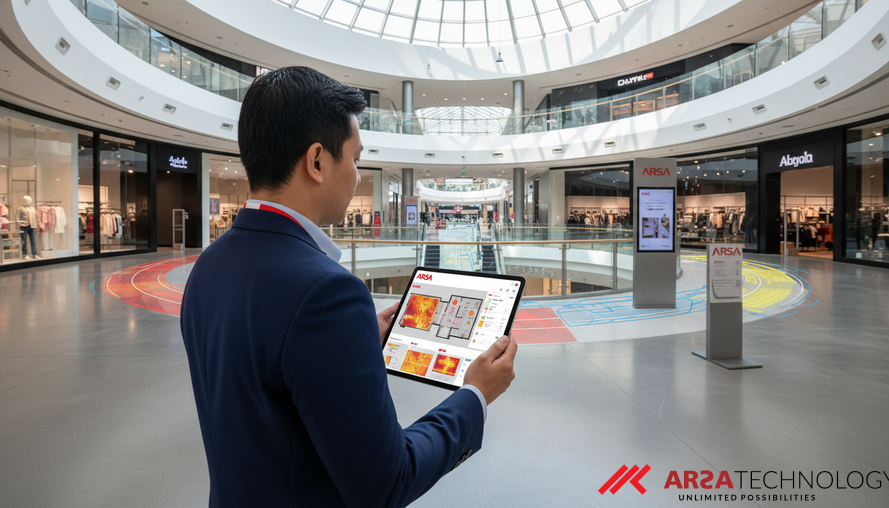
The ability to accurately visualize and analyze customer behavior within a shopping mall is a game-changer. Heatmap analytics, derived from existing CCTV infrastructure, transform passive video feeds into actionable intelligence. These visual representations highlight areas of high and low activity, revealing where customers congregate, where they pause, and which paths they most frequently take. This granular understanding is fundamental to strategically adjusting store layouts, common areas, and even advertising placements.
AI Dwell Time Analysis for Shopping Malls: Beyond Foot Traffic
While foot traffic analytics for tenant performance provides a baseline understanding of visitor volume, AI dwell time analysis for shopping malls offers a deeper dive into engagement. Knowing not just *how many* people pass by a store, but *how long* they spend in front of it or within a specific zone, provides critical context. Long dwell times in certain areas might indicate high interest, while short dwell times in others could signal bottlenecks or unappealing displays. This intelligence allows mall managers to identify underperforming areas and implement targeted improvements, such as reconfiguring common seating areas, optimizing store window displays, or adjusting promotional signage.
Customer Movement Pattern Analysis CCTV: A Foundation for Strategic Planning
The backbone of effective retail optimization is robust customer movement pattern analysis CCTV. By integrating AI video analytics software with existing surveillance systems, mall operators can continuously monitor and analyze visitor flow across their entire property. This allows for the identification of popular routes, congestion points, and overlooked zones. For instance, if analytics reveal that a particular corridor consistently has low foot traffic, managers can explore strategies like placing interactive kiosks or pop-up stores to draw visitors in. This data-driven approach helps to optimize retail floor plan with heatmap data, ensuring a logical and engaging flow for shoppers.
ARSA Technology’s ARSA Smart Retail Counter (Software) is specifically designed to provide these critical insights. As a self-hosted, on-premise solution, it transforms existing CCTV streams into real-time operational intelligence. This means all video streams, inference results, and metadata remain entirely within your infrastructure, ensuring full data ownership and compliance with stringent privacy regulations like GDPR and CCPA.
Optimizing Retail Floor Plan with Heatmap Data
The ultimate goal of deploying customer heatmap analytics is to optimize retail floor plan with heatmap data. This involves using the insights gathered to make strategic adjustments that enhance both the customer journey and tenant profitability. For a mall property manager, this could mean:
- Tenant Placement: Identifying high-traffic areas for premium tenants or strategically placing complementary stores to encourage cross-shopping.
- Common Area Design: Redesigning seating areas, restrooms, or food courts based on dwell time and congestion patterns to improve comfort and flow.
- Wayfinding & Signage: Optimizing directional signage and digital displays to guide customers more effectively to desired destinations, reducing frustration and increasing exploration.
- Event & Promotion Planning: Leveraging heatmaps to determine optimal locations for promotional events or seasonal displays to maximize exposure and engagement.
For a deeper dive into how this technology can be leveraged, explore our article on Leveraging Customer Heatmap Analytics for Store Layout Optimization in Shopping Malls.
The ARSA Advantage: Centralized Intelligence, Uncompromised Privacy
ARSA’s AI Video Analytics Software overview, particularly the Smart Retail Counter module, offers a comprehensive suite of features tailored for shopping mall environments. It provides:
- People Counting: Accurate entry and exit counts for individual stores and entire mall zones.
- Queue Monitoring: Real-time alerts for excessive queue lengths, allowing for proactive staff deployment.
- Heatmap Analysis: Visual representation of customer density across the mall floor, identifying hotspots and cold spots.
- Dwell Time Tracking: Measurement of how long customers spend in specific areas, indicating engagement levels.
- Conversion Analytics: Integration capabilities with POS systems to correlate foot traffic with sales, providing a true measure of conversion rates.
The on-premise deployment model ensures that all processing happens locally on your existing servers, offering centralized processing for multi-store visibility from a single dashboard. This not only guarantees full data ownership but also eliminates recurring cloud costs, providing a clear ROI. Our solutions are built with enterprise-grade security and compliance in mind, adhering to international standards for data privacy. Another relevant read is Unlocking Retail Potential: How to Leverage Customer Heatmap Analytics for Store Layout Optimization.
Realizing Tangible Business Outcomes
Implementing customer heatmap analytics for store layout optimization with ARSA Technology translates into significant business outcomes for mall property managers:
- Increased Tenant Revenue: By optimizing layouts and traffic flow, tenants experience higher footfall and improved conversion rates, leading to increased sales and potentially higher rental yields.
- Enhanced Visitor Experience: A well-optimized mall layout reduces congestion, improves navigation, and creates a more pleasant and engaging shopping environment, encouraging longer visits and repeat customers.
- Operational Efficiency: Data-driven insights enable more efficient resource allocation, from security personnel to cleaning staff, based on real-time activity patterns.
- Competitive Advantage: Malls that leverage advanced analytics to understand and adapt to customer behavior gain a significant edge in attracting and retaining both tenants and shoppers.
- Data-Backed Decision Making: Move away from intuition to precise data for all strategic decisions related to layout, marketing, and operations.
For further insights into measuring retail performance, consider reading Boosting Revenue: How to Measure Retail Store Conversion Rate with AI Analytics.
Frequently Asked Questions
What is the role of AI in customer movement pattern analysis CCTV?
AI plays a crucial role by automating the analysis of vast amounts of CCTV footage. It can accurately detect, track, and classify objects (people, vehicles) in real-time, providing quantitative data on movement patterns, foot traffic, and dwell times that would be impossible to gather manually.
How can foot traffic analytics for tenant performance be improved?
Foot traffic analytics can be significantly improved by combining raw visitor counts with dwell time analysis and heatmap data. This provides context to traffic numbers, revealing engagement levels and allowing mall managers to understand *why* certain areas perform better or worse, leading to more targeted improvements.
What are the privacy considerations for using customer heatmap analytics?
ARSA’s on-premise all ARSA products, including the Smart Retail Counter, are designed with privacy at their core. By processing data locally and not relying on cloud storage, solutions like ours ensure full data ownership and compliance with international frameworks such as GDPR and CCPA. The analytics focus on aggregated, anonymous movement patterns rather than individual identification.
Can ARSA’s solution integrate with existing mall management systems?
Yes, ARSA’s AI Video Analytics Software offers a robust REST API, enabling seamless integration with existing dashboards, alerting systems, and data pipelines, including point-of-sale (POS) and enterprise resource planning (ERP) systems for comprehensive retail intelligence.
Conclusion
For shopping mall property managers, the opportunity to transform operational challenges into strategic advantages is within reach. By embracing customer heatmap analytics for store layout optimization, you can move beyond traditional methods and leverage the power of AI to create more engaging, efficient, and profitable retail environments. The ARSA Smart Retail Counter (Software) offers a proven, privacy-compliant, and scalable solution to achieve these goals, providing the centralized intelligence needed to thrive in today’s dynamic market.
Ready to transform your shopping mall with intelligent retail analytics? Contact ARSA solutions team today to explore how our on-premise AI video analytics can optimize your operations and drive measurable ROI.
Stop Guessing, Start Optimizing.
Discover how ARSA Technology drives profit through intelligent systems.