
On-Premise AI For Hospitals And Clinics
Patient data has to stay inside the hospital. ARSA runs queue analytics, face recognition for staff access and private language models on hardware in your own building, so registration, restricted zones and paperwork get AI support while every record stays on your network.
Core Applications
AI Use Cases For Hospitals And Clinics
An outpatient wing runs on queues. Patients wait at registration, at the clinic desk and at the pharmacy, and management learns how long from complaints weeks later. Staff-only areas rely on a key card or a guard, and paperwork takes hours every day. Each of these jobs touches patient data, so the AI that helps with them has to run inside the hospital.
- Registration camera
- AI Box inside the hospital
- Counts on the dashboard
Registration And Pharmacy Queues
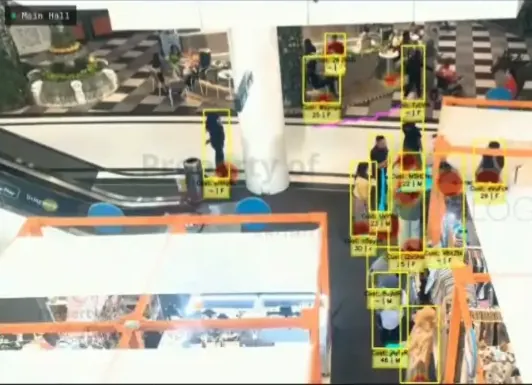
Count arrivals at the main entrance and measure queue length and waiting time at registration, the clinic desks and the pharmacy counter. Open another counter before the queue builds and plan each shift from real arrival patterns. The system counts people and identifies no patient.
Staff-Only Zones And Access
Run the on-premise Face Recognition SDK on your own servers to open the pharmacy store, the records room or staff areas for enrolled staff only. Staff enrol with their consent, a liveness check rejects a printed photo or a screen, and patients and visitors are never enrolled.
Private LLM For Hospital Documents
Search and summarise policies, SOPs, referral letters and administrative records with a language model that runs on your hardware. No document reaches an external API, every write to another system waits for a person to approve it, and clinical decisions stay with your clinicians.
Challenges
What A Hospital Deployment Has To Handle
Patient Data
Under Indonesia’s Personal Data Protection Law (UU PDP), health information is specific personal data. Video, face templates and documents are processed on an AI Box or your own servers inside the hospital network.
Patients Stay Anonymous
Queue analytics counts heads and measures waits without creating face templates. Face recognition is limited to staff who have agreed to enrol, so a patient walking through registration is counted and never identified.
Around The Clock
A hospital never closes. The system keeps working without an internet connection, and alerts go to whoever can act on them: the registration supervisor, the pharmacy lead or the security post.
Camera Placement For Registration And Pharmacy Queues
A queue figure is only as good as the camera’s view of the doorway or the counter. Our camera standard, ARSA-CVS-001, sets the figures every hospital camera is checked against before a deployment:
- Cameras: 2 MP minimum, 4 MP recommended, at 15 fps or more.
- Entrances: an overhead or steeply angled camera above the door, 60 to 90 degrees below horizontal, giving at least 113 PPM (pixels per metre) at the counting line, with at least 50 lux of light.
- Queues at registration and the pharmacy: an angled view of 30 to 50 degrees, 55 at most, giving at least 99 PPM along the queue, with at least 50 lux. With a standard 60 degree lens a 2 MP camera reaches 16.8 m and a 4 MP camera 22.4 m.
- Appliance: on a UPS with at least 15 minutes of hold-up, in a location under 35 °C with clear airflow.
Maximum distance with a standard 60 degree lens
An overhead camera sees the tops of heads, which suits a waiting hall where no patient should be identified. If one of your cameras falls short, the free AI assessment report says which one and how to move it; the full figures are on the system requirements page.
FAQ
AI For Hospitals And Clinics FAQ
What hospital directors, IT teams and data protection officers ask first.
Does patient video or data leave the hospital?
No. Detection runs on an AI Box inside your network or on your own servers, and works without an internet connection. Only counts and events reach your dashboard.
Does queue analytics identify patients?
No. It counts people crossing a line and measures how long a queue takes to clear. No face templates are created and no name is attached to a count, so registration and pharmacy figures stay anonymous.
How does on-premise AI support our UU PDP obligations?
It keeps health data and video inside the hospital, with no third-party processor in the path. The assessment of compliance stays with your data protection officer; ARSA supplies the on-premise system and its records.
Can face recognition control access to staff-only zones?
Yes. The on-premise Face Recognition SDK runs fully offline on your servers. Enrol the staff who have given consent, set the doors each may open, and the liveness check rejects a photo or a screen. Patients and visitors are never enrolled.
Can we offer vitals checks to staff and visitors?
The Self-Check Health Kiosk captures blood pressure, heart rate, oxygen saturation and temperature in about 90 seconds for occupational health and visitor programmes, with face or QR identification and a web dashboard that can run on-premise. It is sold in Indonesia only, and it is a screening and wellness device that makes no diagnosis.
Can a private language model work with our clinical and administrative documents?
Yes. ARSA builds private LLM and retrieval systems that run on your hardware, so policies, SOPs and referral letters are searched and summarised without any document reaching an external API, and a person approves every action. The model helps staff with paperwork and makes no diagnosis or treatment decision.
How do we test queue counting on our own cameras?
Send up to three one-minute clips of a registration hall or pharmacy queue through the free AI assessment. An ARSA engineer returns an annotated clip, a report comparing the model’s count with a manual count, and a 30-minute call, within 3 business days. If hospital policy keeps footage on site, request an on-site assessment and ARSA engineers measure the models inside your network.
Can we start with one outpatient wing?
Yes. Start with the cameras over one registration hall or pharmacy counter on a single AI Box then add wings and branch clinics to the same dashboard.
Test It On Your Own Waiting Areas
Send us up to three one-minute clips from your registration or pharmacy cameras and an ARSA engineer returns an annotated clip, a report with the numbers and a 30-minute call within 3 business days, free. Where patient privacy rules keep footage inside the hospital, an on-site assessment measures our models in your halls, and its fee is deducted from the project.
Every deployment follows the same steps: a site survey, a check of each camera against our placement standard, installation on an AI Box or your own servers, tuning on your footage and a handover. Video is processed on site and works without an internet connection. In a proof of concept for Bank Rakyat Indonesia (BRI), ARSA measured queues and waiting times at a busy branch counter, the same kind of public service floor a hospital runs at registration.
Related reading: on-premise AI for hospital patient records and how a health kiosk cuts occupational health costs for hospitals.