
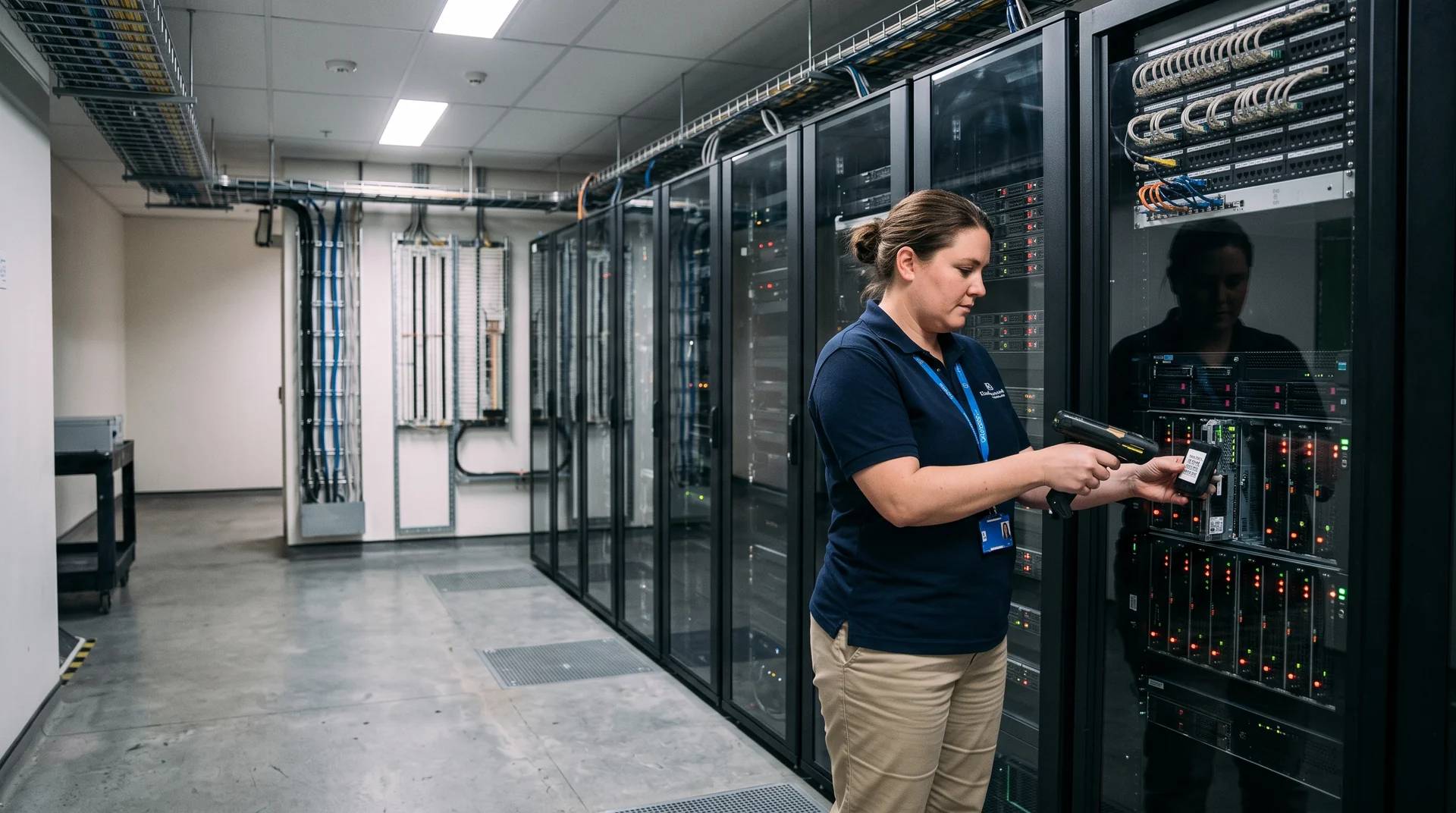

A nurse with forty discharge summaries to write before the end of a shift will find the fastest route through them. In a Wolters Kluwer survey published in January 2026, more than 40% of medical workers and administrators said they knew of colleagues using unapproved AI tools, and nearly 20% said they had used one themselves (Healthcare Dive). ARSA Sovereign exists because the honest fix is to make the compliant route the fast one, inside the hospital network, with no outbound connection at inference time.
THE BEHAVIOR
Why Patient Records End Up In Public Chatbots
Staff paste protected health information into consumer chatbots because the manual alternative costs them hours they do not have. Summarizing a long admission history, extracting medication lists from a scanned referral, or drafting a prior authorization letter takes an afternoon by hand and minutes with a language model, and clinical teams worked that out some time ago.
An IT policy that forbids the behavior does not change the arithmetic that produces it. It moves the behavior onto personal phones and personal accounts, where the hospital has no log, no retention control, and no way to answer an auditor asking where a record went. The public versions of general-purpose chatbots do not execute Business Associate Agreements, so a single paste of identifiable patient data into one is already a reportable event under HIPAA (Paubox).
The productive response is to give the same speed to staff inside the building. That is the case ARSA Sovereign is built for: a system that reads the documents a hospital already generates, reasons over them on hardware the hospital owns, and never requires a connection to anything outside the rack.
THE REGULATION
What HIPAA, GDPR And PDPL Ask Of An AI Vendor
Every regime that governs patient data asks the same two questions of an AI system: who else receives the data, and where does it physically sit. An appliance that processes documents locally answers both without a contract, because no third party receives anything.
Under HIPAA, any vendor that creates, receives, maintains, or transmits PHI on a covered entity’s behalf is a business associate and needs a signed BAA, and an AI-grade agreement has to name the subprocessor chain and forbid the use of PHI for model training unless the covered entity explicitly authorizes it (HIPAA Journal). Under GDPR, health data is a special category under Article 9 and carries a heavier lawful basis and a transfer analysis on top of it. Under Saudi Arabia’s PDPL, personal data stays in the Kingdom by default, and a cross-border transfer of health data can require prior authorization from the regulator along with a transfer impact assessment on the recipient (Kiteworks). The UAE’s federal PDPL applies from 1 January 2027, while the DIFC and ADGM frameworks are already enforced independently.
The appliance approach sidesteps the transfer question rather than satisfying it. There is no recipient to assess, no subprocessor chain to describe, and no region to pick, because the document never crosses the hospital’s firewall.
THE SYSTEM
What ARSA Sovereign Does With A Patient Record
ARSA Sovereign is a 4U rack or tower appliance that reads documents, reasons over them locally, and writes the result into enterprise systems behind an approval gate. The product is currently in pilot, and the description below stays inside what the product page publishes.
Reads The Document
Scanned PDFs, handwritten annotations on a referral, dense multi-page layouts, and schematics are parsed by full-page layout analysis. On the Sovereign 96, that parsing runs on a dedicated 24 GB OCR accelerator, so document work never competes with reasoning for accelerator memory. On the Sovereign 48, OCR shares the single 48 GB accelerator, which is the practical difference between the two systems.
Reasons Locally
An open-weight vision-language model in the 27 billion parameter class runs on the primary accelerator, unquantised at full precision on the 96 and quantised on the 48. Context headroom is sized to hold a long document in working memory at once. ARSA uses standard deep learning frameworks and publishes no fixed model version, because the open-weight field moves faster than product literature does; the model is kept current under the support term.
Builds The Interface For The Task
State a goal in plain language and the system generates the form, table, validation rules, and approval steps that the job needs. A knowledge worker extracting eleven fields from a referral gets a wizard with eleven fields in it. A persistent side panel accepts plain-language edits, so changing one field re-renders the affected step immediately.
THE HARDWARE
Two Configurations, Published Prices
| Item | ARSA Sovereign 48 | ARSA Sovereign 96 |
|---|---|---|
| Primary accelerator memory | 48 GB | 96 GB |
| Dedicated OCR accelerator | Shares the primary accelerator | 24 GB |
| Language model precision | Quantised | Unquantised, full precision |
| System memory | 128 GB ECC | 128 GB ECC |
| Storage | 8 TB enterprise | 20 TB enterprise, RAID 1 |
| Perpetual price | $26,900 | $44,900 |
| Support, year 4 onward | $4,500 per year | $7,500 per year |
| Chassis | 4U rack or tower | 4U rack or tower |
| Lead time | Three to four weeks | Three to four weeks |
International list price in USD, with three years of support, model updates, and fleet management included. Import duty, VAT, customs clearance, and rack installation are excluded and are the buyer’s responsibility. A software-only licence is available at $14,900 per node per year on a validated configuration with a 48 GB accelerator minimum. Units ship from Surabaya.
THE BOUNDARIES
What The Appliance Does Not Do
The published limits matter more to a hospital CIO than the capabilities do, so here they are plainly. There is no autonomous write mode to enable: every connector is read-only by default and every write is staged for explicit human approval before it commits. No document, query, or result reaches ARSA, and the management channel can be disabled entirely for air-gapped operation, with model updates delivered as signed offline packages over the hospital’s own approved media process.
The published connectors are Odoo, SAP, and Zoho, delivered over Model Context Protocol. ARSA publishes no EMR or HIS connector, so any integration with a clinical record system is scoped work rather than a feature you switch on. The platform side runs a hardened Linux host with kernel livepatching, FIPS 140-3 validated cryptographic modules, and CIS and DISA-STIG hardening profiles applied at build, with the vector index and document vault on encrypted local storage.
A 27 billion parameter open-weight model also has a ceiling. On the hardest open-ended reasoning, a frontier hosted model performs better. This system is built for document extraction, structured summarization, form generation, and workflow execution, and it runs where patient data is permitted to be. Hospitals should also note that nothing here is a medical device, and none of it produces a clinical determination.
Frequently Asked Questions
Is It On-Premise Or On-Premises?
Both spellings are in common use and mean the same deployment model. “On-premises” is the older and grammatically stricter form, while “on-premise” has become the dominant usage in vendor and buyer language. What matters for a compliance review is the substance: the compute, the storage, and the model weights sit on hardware the hospital controls.
Does An On-Premise Appliance Remove The Need For A Business Associate Agreement?
It removes the transfer that creates the requirement. A BAA is required where a vendor creates, receives, maintains, or transmits PHI on your behalf, and ARSA Sovereign is designed so none of those four verbs apply to ARSA. Confirm this with your own privacy counsel against your deployment, particularly if you enable the encrypted fleet management channel.
How Does SaaS Compare With On-Premise For Hospital AI?
SaaS wins on capital cost, elasticity, and time to first use, and on-premise wins on data residency, predictable cost at volume, and independence from a vendor’s uptime. For genuinely bursty and occasional workloads, cloud is the cheaper answer and ARSA will say so. The calculation flips when document volume is steady, when cloud API spend has stopped being an experiment, or when a regulator has already told you where the data has to live.
Can The System Write Into Our Systems Without A Person Approving It?
No. Every write is staged for explicit human approval before commit, and there is no autonomous write mode available to enable. A clinician or administrator reviews the structured output and releases it.
What Happens To A Document After The Appliance Processes It?
It stays on the appliance. Text extraction, embedding, indexing, and reasoning all run locally against encrypted storage, and nothing is transmitted to ARSA or to any third party. For a closed network, the appliance runs fully air-gapped, with licence activation and model updates handled offline.
Do We Need A Data Center To Run One?
No. The chassis converts between 4U rack mount and a standalone tower with acoustic damping, and it is designed to run in an office environment. What it does need is power, cooling, and someone who owns it.
Start With The Constraint, Then The System
If your problem is that staff are moving patient records into tools you cannot audit, the fix is a system that is faster than the workaround and sits inside your network. Read the full specification and pricing on the ARSA Sovereign product page, see how paid scoping engagements work under services, or contact us with your document volumes and your regulator, and we will tell you which of the two configurations fits.