

MASALAH check aside, here is the article.
How To Add Edge AI Analytics To An Existing CCTV Or NVR System
A retrofit means one appliance joining the network beside the recorder you already own, pulling copies of the streams your cameras already produce. In most estates nothing is ripped out and nothing is rewired. What decides whether it works is the protocol each camera speaks and the pixel density at the spot where you want a detection, and both of those can be checked before anything is bought.
THE PREMISE
What A Retrofit Actually Attaches To
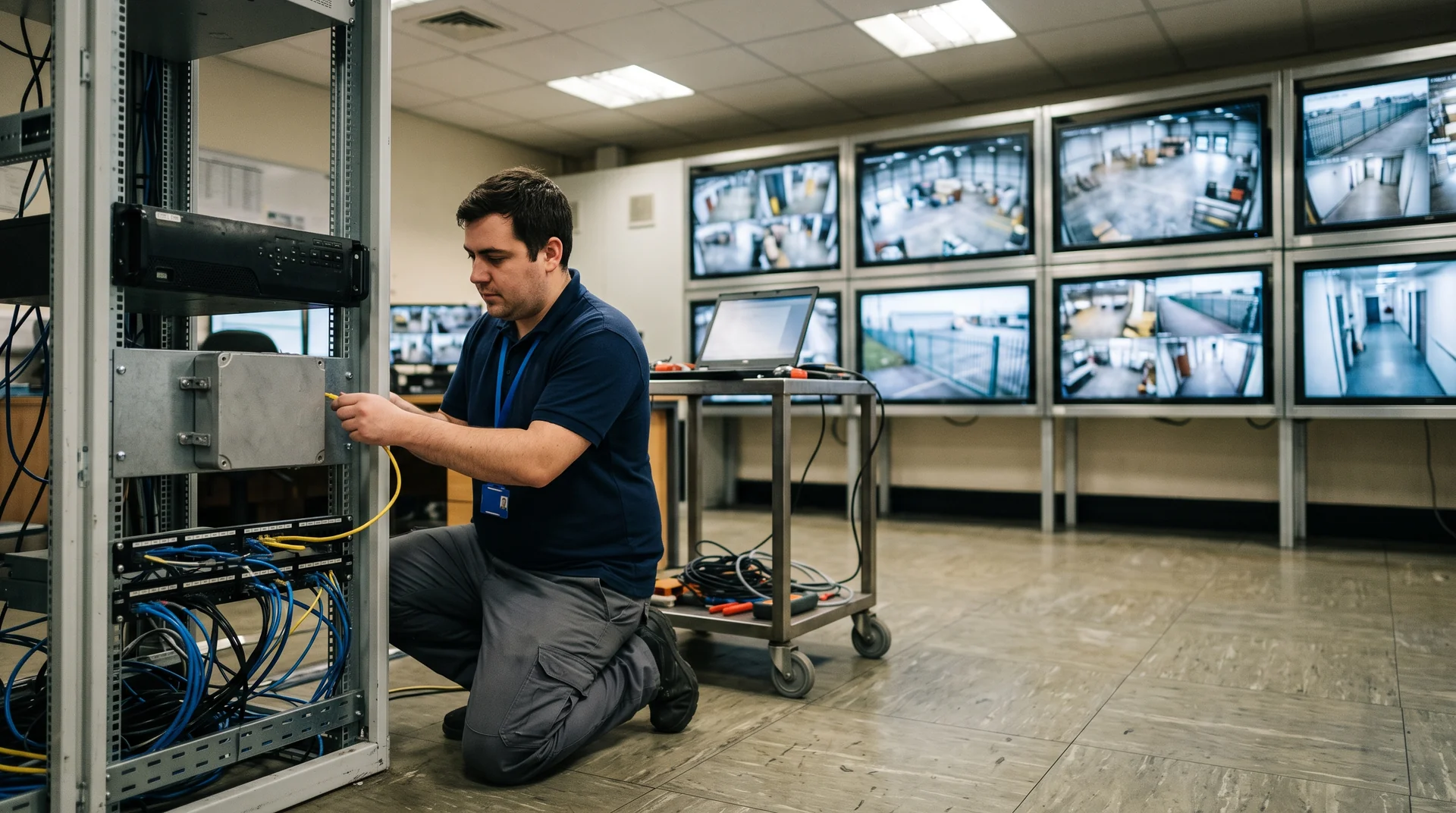
An edge AI appliance is a second consumer of your video. It opens a stream, runs detection on the frames, writes events to a local database, and leaves your recording chain untouched. The cameras keep recording to the NVR exactly as before, at the same retention, under the same VMS licences.
That matters for the objection most buyers raise first, which is sunk investment. A 20 camera estate installed four years ago represents real money, and the fear is that analytics arrives as a rip and replace quotation. It usually does not. The ARSA AI Box Series connects to ONVIF and RTSP cameras from 2 MP upward, and the appliance price of $1,890 for the three camera Mini covers hardware, local dashboard and a remote setup session, with the cameras themselves left alone.
The parts of the estate that do get examined are the positions, one by one. A camera aimed at a corridor for general surveillance was placed to see who walked past. A camera used for helmet detection has to resolve the structure of a hard hat against soft headwear, which is a harder job at the same distance.
COMPATIBILITY
Which Cameras And Recorders Can Be Retrofitted
Any IP camera that is ONVIF conformant and exposes an RTSP stream in H.264 can be retrofitted. ONVIF Profile S is the relevant baseline: it mandates live streaming over RTSP with H.264 or MJPEG encoding, plus configuration of resolution, bitrate and frame rate, and any Profile S device is expected to interoperate with any Profile S client regardless of who made either (ONVIF). One planning note for anyone buying cameras alongside a retrofit: ONVIF announced in October 2025 that Profile S is being retired, and manufacturers cannot submit new products for Profile S conformance after 31 March 2027, with Profile T named as the replacement (ONVIF).
Two categories cause trouble. Consumer cameras tied to a vendor cloud app often disable RTSP entirely or expose it only through the manufacturer’s own software, which leaves nothing for a third party to open. Analog cameras on a DVR produce no IP stream at all, so they reach an AI appliance only through an encoder or a hybrid recorder that republishes each channel as RTSP, and the republished stream inherits whatever resolution the analog chain already imposed.
THE THREE WAYS IN
Three Places To Tap The Video
Directly From The Camera
The appliance opens the camera’s own RTSP stream on the VLAN. This is the cleanest path, because the frames arrive at full main stream quality with one hop and one point of failure. It needs the camera credentials and a route from the appliance to the camera subnet.
From The NVR Or VMS
Most recorders republish each channel over RTSP, usually with a main stream and a lower resolution sub stream on separate URLs. Pulling from the recorder suits sites where the cameras sit on a closed network the recorder already bridges. Pick the main stream where PPE or face work is involved, because sub streams are commonly 640 by 360 and will fail the pixel density floor.
Through An Encoder For Analog
Analog channels reach the appliance through a video encoder that converts each BNC input into an RTSP stream. Expect to check the encoder output resolution and frame rate rather than the camera datasheet, since the encoder sets the ceiling.
Worth knowing about all three: RTSP carries video and audio and carries no analytics metadata, so the motion events, tamper flags and VCA your recorder may already generate do not travel across the link (SCW). The appliance derives its own events from the frames.
THE NUMBERS
What Each Camera Position Has To Meet
The floor below is per position rather than per site. One camera can pass for vehicle counting and fail for helmet detection at the same mounting point, because the pixel density required differs by class.
| Item | Requirement |
|---|---|
| Protocol | ONVIF, RTSP, H.264 High Profile |
| Resolution | 2 MP minimum, 4 MP recommended |
| Frame rate | 15 fps minimum |
| Helmet detection | 262 PPM, reaching 6.3 m on 2 MP with a 60 degree lens, 8.4 m on 4 MP |
| Vest detection | 153 PPM, reaching 10.9 m |
| Vehicle counting | 24.9 m on 2 MP |
| Tilt | 10 to 25 degrees optimal, 35 maximum for helmets, 40 for vests, steeper than 45 prohibited |
| Lighting | 50 lux minimum at the target plane, white light for vests at night |
| Bandwidth per stream | 2.48 Mbps at 2 MP, 4.4 Mbps at 4 MP, main stream, CBR |
| Cabinet rating outdoors | IP66, IK08 recommended |
The accepted reference case in ARSA-CVS-001 is a 3.5 m mount at 6.0 m standoff with 22 degrees of tilt, which passes for helmets on a 2 MP camera. Push the same camera to 12 m and it fails for helmets while still passing for intrusion. The full standard sits at /system-requirements/, and the lens and field of view visualiser will show you the coverage a given focal length produces before you climb a ladder.
THE NETWORK
What The Retrofit Adds To Your Network
Each analysed stream is a second read of video that was already being recorded, so the load lands on the camera uplink rather than on storage. At 4 MP that is roughly 4.4 Mbps per camera, and the guidance is to keep the camera VLAN uplink below 70% at peak with 25% PoE headroom on the switch.
The appliance itself needs no outbound path. Detection, alerting and the local dashboard run with the internet disconnected, and cloud connectivity is off by default, which is why a site behind a SIM router or a double NAT is a supported deployment rather than an exception. What connectivity buys you is remote support and online model updates; without it, updates arrive as offline packages. The broader argument for keeping inference local is covered in edge AI versus cloud AI for enterprise video analytics.
THE LIMITS
What A Retrofit Does Not Give You
The appliance analyses streams and stores event metadata with detection snapshots locally. Video retention stays the responsibility of your NVR or VMS, so a retrofit adds no storage and replaces no recorder. Cameras, switches, cabling, lighting and installation labour are outside the appliance price.
Infrared illumination defeats hi-vis vest detection, because the camera returns a monochrome image and the rule depends on colour. Night coverage for vests requires white light at the target. A camera mounted above 45 degrees of tilt is refused outright for PPE and face work, since the wearer’s own body occludes the equipment the model is looking for.
THE SEQUENCE
How The Retrofit Is Ordered
Start with the positions you already have. A Remote Camera Design Review is $1,500 and takes one week, returning a pass or fail for each camera position with any remediation priced before you sign anything. Sites above roughly 50 cameras, or sites where the drawings no longer match the building, take the On-Site Camera Survey at $4,500 plus travel, covering up to 50 cameras. Either fee is deducted from the project fee if you contract within 90 days, and both are listed at /services/.
Hardware follows in three to four weeks from order. Commissioning is short: power and network into the unit and stream URLs configured in about 15 minutes, zones and thresholds drawn in about 45, events firing live after that.
FAQ
Can The AI Box Pull Streams From My NVR Instead Of The Cameras?
Yes, provided the recorder republishes channels over RTSP, which most do. Use the main stream URL rather than the sub stream for PPE, face or plate work, because sub streams are usually downscaled below the pixel density these classes require. The recorder keeps recording as it did before.
Will It Work With Analog Cameras On A DVR?
Only through an encoder or hybrid recorder that turns each analog channel into an RTSP stream. The encoder output then has to clear 2 MP and 15 fps, which older analog chains frequently cannot do, so these positions are the most common fail in a design review.
Does The AI Box Work Behind A SIM Router Or Without Internet?
Yes. Detection, alerting and the dashboard are fully local, and cloud connectivity is optional and disabled by default. A SIM router or an air-gapped network changes only how updates and remote support are delivered, which becomes an offline package process.
Which Camera Brands Are Supported?
Any ONVIF conformant IP camera meeting the resolution and frame rate minimums, with H.264 recommended. Brand matters less than conformance, and the cameras that fail are the consumer models that restrict RTSP to their own app. Compatibility confirmation for a specific model is available on request.
What Does A Six Camera Retrofit Cost?
Two AI Box Mini appliances at $1,890 each, plus safety analytics licences at $45 per camera per month, or $1,350 per camera bought outright. The appliance is purchased in both cases, and the cameras are already yours.
How Many Cameras Can One Appliance Take?
The Mini handles up to three streams and the Server up to 25. A multi gate site usually routes back to one Server rather than scattering Minis, which holds as long as the cameras reach one location on the network.
Start With The Positions You Already Own
Most estates need a design review before they need hardware. See the appliances, camera limits and published prices at the ARSA AI Box Series, or send your camera list and site drawings through /contact-us/ and we will tell you which positions pass before anyone quotes you.
Sources: ONVIF Profile S, ONVIF Profile S retirement notice, SCW on RTSP